
ผลประโยชน์ร่วมของสวนดาดฟ้าบำรุงรักษาต่ำ เพื่อการอนุรักษ์พลังงาน และลดการปล่อยก๊าซเรือนกระจก
คณะสิ่งแวดล้อมและทรัพยากรศาสตร์ มหาวิทยาลัยมหิดล


{:th}
ผลประโยชน์ร่วมของสวนดาดฟ้าบำรุงรักษาต่ำ เพื่อการอนุรักษ์พลังงาน และลดการปล่อยก๊าซเรือนกระจก
คณะสิ่งแวดล้อมและทรัพยากรศาสตร์ มหาวิทยาลัยมหิดล
โครงการวิจัย:
วัสดุพืชพรรณ สำหรับสวนดาดฟ้าบำรุงรักษาต่ำ เพื่อการอนุรักษ์พลังงาน และลดคาร์บอนฟุตพริ้นท์
ผลงานวิจัย:
ผลประโยชน์ร่วมของสวนดาดฟ้าบำรุงรักษาต่ำ เพื่อการอนุรักษ์พลังงาน และลดการปล่อยก๊าซเรือนกระจก
ผู้วิจัย:
อ. ดร.บุญลือ คะเชนทร์ชาติ
ผศ. ดร.กันต์ ปานประยูร
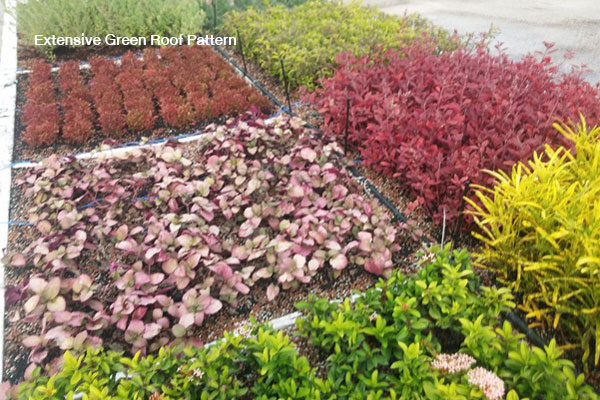
สวนดาดฟ้าแบบบำรุงรักษาต่ำ เป็นวิธีการหนึ่งเพื่อการอนุรักษ์พลังงานของอาคารขนาดใหญ่ แต่ฐานข้อมูลประสิทธิภาพเชิงความร้อนของชนิดพืชพรรณ เพื่อใช้เป็นค่าอ้างอิงสำหรับการออกแบบอาคาร หรือปรับปรุงค่าการอนุรักษ์พลังงานจากการลดการใช้ไฟฟ้า และลดคาร์บอนฟุตพริ้นท์ยังมีไม่มากนัก
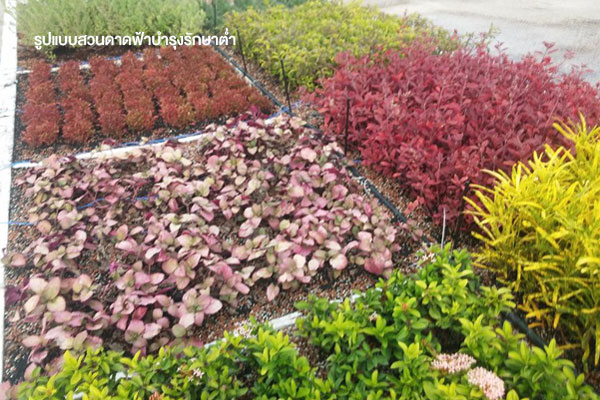
งานวิจัยนี้มีวัตถุประสงค์ เพื่อศึกษาเปรียบเทียบประสิทธิภาพการลดความร้อนเข้าสู่อาคารจากดาดฟ้า ของพืชพรรณที่มีคุณสมบัติเจริญเติบโตได้ดีบนสภาพดาดฟ้าที่มีอากาศร้อน จำนวน 30 ชนิด จากแหล่งขายต้นไม้ และตามธรรมชาติบริเวณภูเขาหินปูน ดำเนินการทดลอง 4 รูปแบบ คือ 1) ดาดฟ้าที่ปลูกพืช 2) ดาดฟ้าที่มีวัสดุปลูกเพียงอย่างเดียว 3) ดาดฟ้าที่ปูแผ่นใยสังเคราะห์และแผ่นระบายน้ำ และ 4) ดาดฟ้าพื้นคอนกรีตเปลือย (ชุดการทดลองควบคุม)
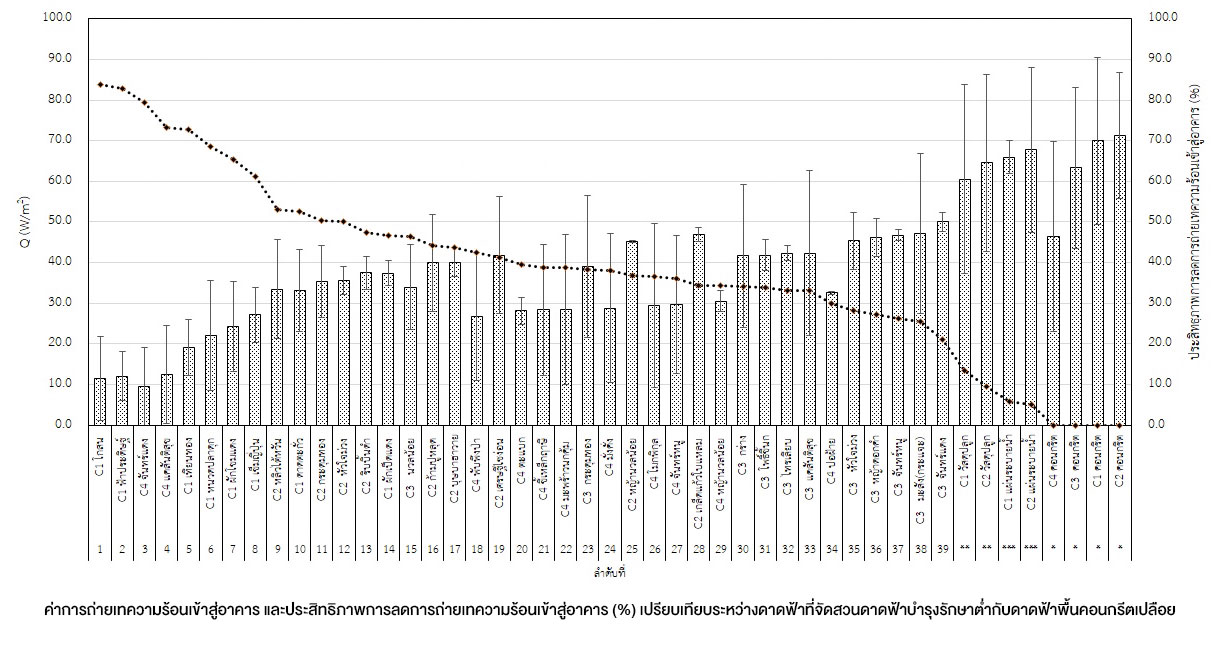
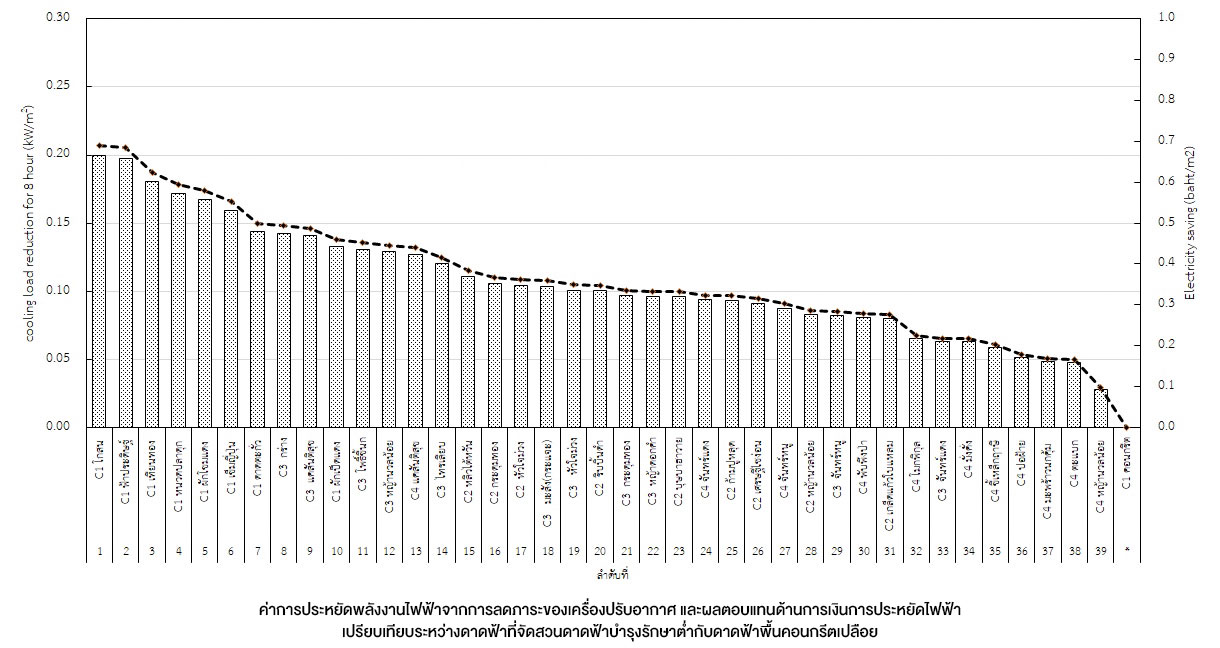
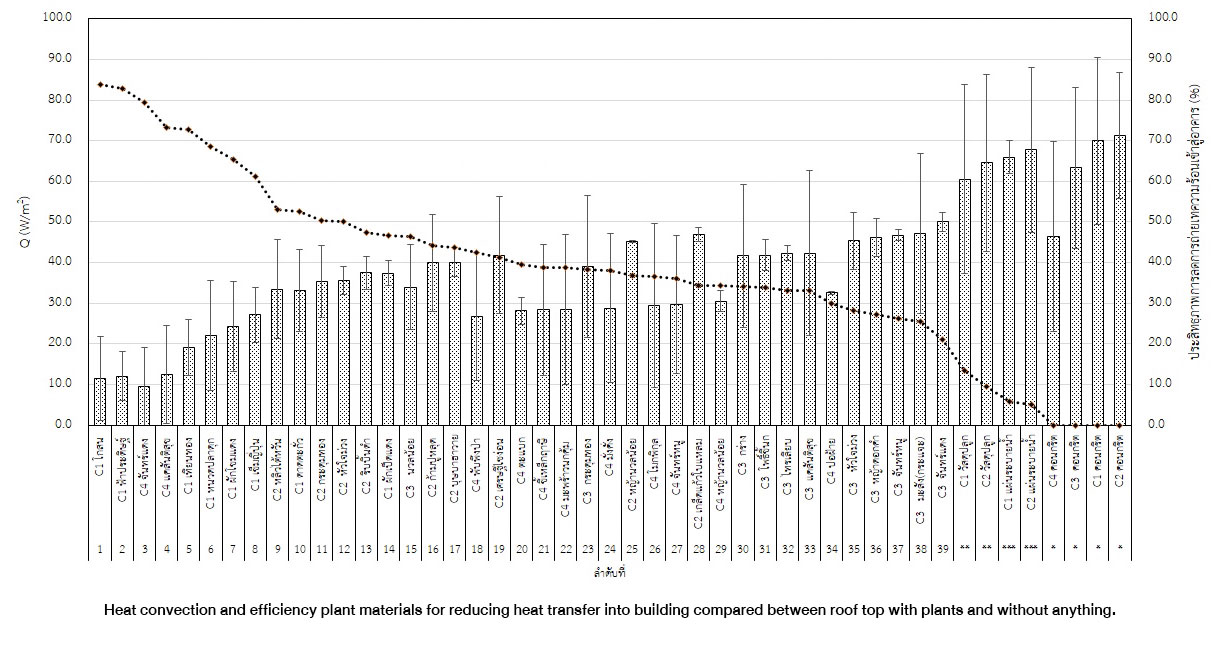
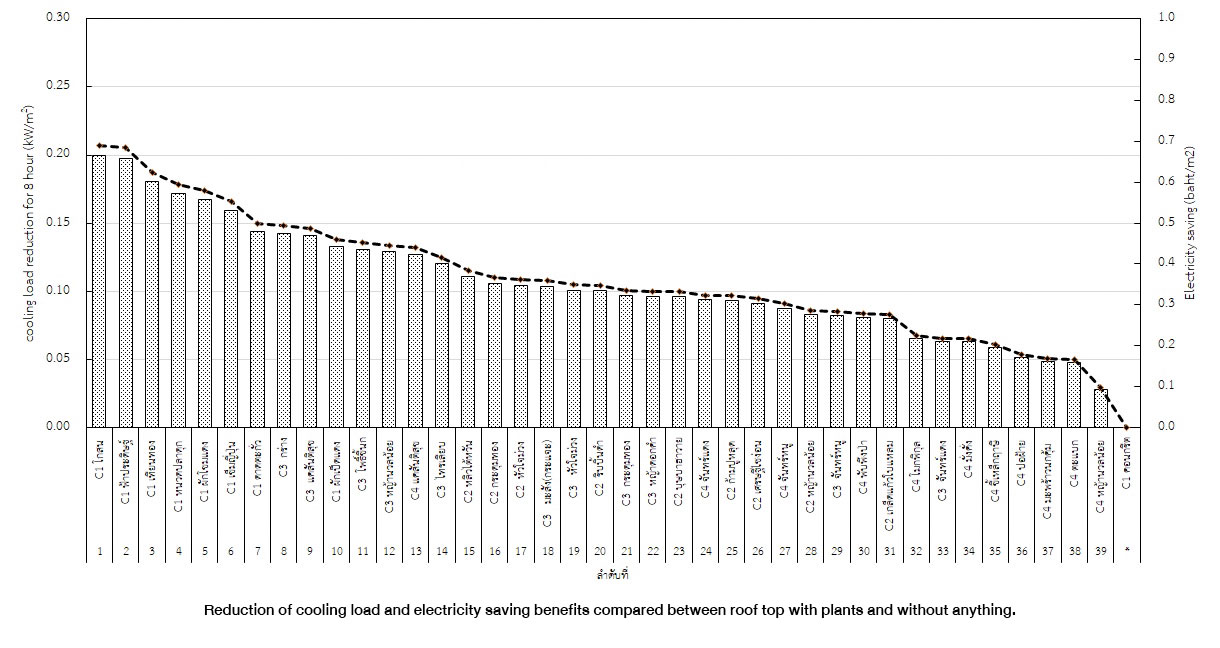
ผลการทดลอง พบว่าค่าความแตกต่างของอุณหภูมิของพื้นดาดฟ้าที่ปลูกพืชกับไม่ปลูกพืช มีค่าเฉลี่ยต่ำกว่า 2.76 – 12.23 องศาเซลเซียส ซึ่งมีประสิทธิภาพลดความร้อนที่ถ่ายเทเข้าสู่อาคาร ร้อยละ 20.98 ถึง 83.73 สามารถประหยัดพลังงานไฟฟ้าจากการลดภาระของเครื่องปรับอากาศ 0.1997 กิโลวัตต์ชั่วโมงต่อตารางเมตรต่อวัน และให้ผลตอบแทนการประหยัดไฟฟ้าคิดเป็นเงิน 0.69 บาทต่อตารางเมตรต่อวัน
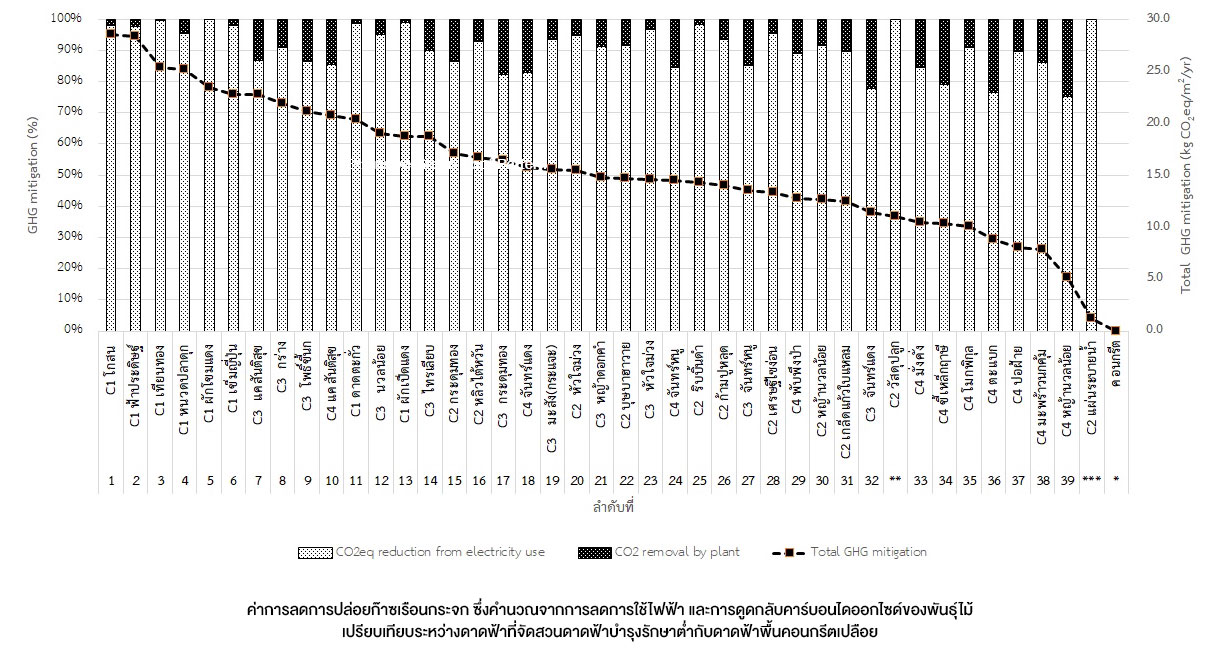
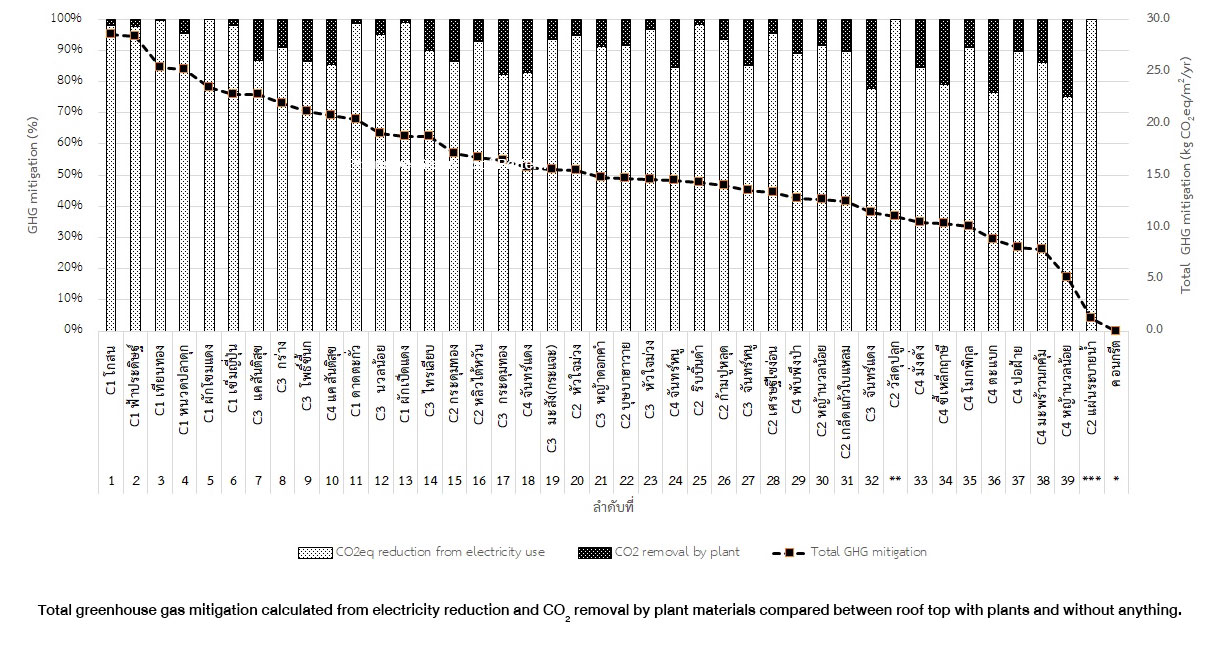
สำหรับการดูดกลับคาร์บอนไดออกไซด์ของสวนดาดฟ้า มีค่าระหว่าง 0.04 – 3.01 กิโลกรัมคาร์บอนไดออกไซด์ต่อตารางเมตร เมื่อรวมกับการลดการปล่อยก๊าซเรือนกระจกทางอ้อมจากการลดการใช้ไฟฟ้า สวนดาดฟ้าแบบบำรุงรักษาต่ ำสามารถลดการปล่อยก๊าซเรือนกระจกรวมต่ำสุดระหว่าง 5.19 – 28.46 กิโลกรัมคาร์บอนไดออกไซด์เทียบเท่าต่อตารางเมตรต่อปี โดยพรรณไม้ที่เจริญเติบโตได้ดี อัตรารอดชีวิตสูง และดูแลรักษาง่าย เหมาะสมสำหรับการจัดสวนดาดฟ้ามากที่สุด 5 ชนิดแรก ได้แก่ จันทร์แดง (Dracaena cochinchinensis) แคสันติสุข (Santisukia kerrii) จันทร์หนู (Dracaera Kawcesakii) โกสน (Codiaeum variegatum (L.)) และฟ้าประดิษฐ์ (Convolvulus mauritianus Boiss) ซึ่งพืชพรรณสามชนิดแรกมีถิ่นกำหนดจากแหล่งธรรมชาติภูเขาหินปูน
โดยสรุป อุณหภูมิของพื้นดาดฟ้าอาคารที่ปลูกพืช มีค่าต่ำกว่าพื้นอาคารคอนกรีตเปลือยอย่างมีนัยสำคัญ อย่างไรก็ตาม พบความผันแปรของประสิทธิภาพของชนิดพืชพรรณ ตามลักษณะทางสัณฐานวิทยา ได้แก่ พื้นที่ใบ รูปทรง ทรงพุ่ม ช่องว่างภายในเรือนยอด ที่มีผลต่อการเป็นฉนวน เพื่อดูดซับความร้อนของต้นไม้ และการลดความร้อนจากการคายระเหยน้ำของพืช
การติดต่อ:
อาจารย์ ดร.บุญลือ คะเชนทร์ชาติ
คณะสิ่งแวดล้อมและทรัพยากรศาสตร์ มหาวิทยาลัยมหิดล
0 2441 5000 ต่อ 1219
boonlue.kac@mahidol.ac.th
Co – benefits of extensive green roof for saving electricity and mitigating greenhouse gases emission.
Faculty of Environment and Resource Studies, Mahidol University
Project Title:
Plant materials for extensive green roof to conserve energy and reduce carbon footprint.
Research Title:
Co – benefits of extensive green roof for saving electricity and mitigating greenhouse gases emission.
Researcher (s):
Dr.Boonlue Kachenchart
Asst. Prof. Dr.Gunn Panprayun
The extensive green roof is an alternative method for conserving energy in large building. However, the database of plant materials for reducing heat convection from top roof with and without plants is inadequate.
The objective of this research is to identify the suitable plant materials for extensive green roof to conserve energy and reduce carbon footprint. There were 4 treatments including 1) top roof with plants, 2) with only substrates, 3) with synthetic fiber and water drainage sheets, and 4) without anything (control).
The results showed that the plant plots had roof surface temperature lower than the control unplanted plots at the range of 2.76 ºC – 12.23 ºC and reduced the heat that could transfer to the building by 20.98-83.73%. Thus, the plant plots could reduce electrical energy use by reducing the load of air condition by 0.1997 kW h/m2/day and saving the electricity cost by 0.69 baht/m2/day.
The carbon dioxide removal efficiency of the roof garden was 0.04-3.01 0.04 kg CO2/m2. When combined with the reduction of indirect greenhouse gas emission via electricity reduction, the roof garden reduced the total greenhouse gas emission at 5.19-28.4639 kg CO2eq/m2/year depending on plant materials.
When considered the ability to reduce the transferred heat from roof to building, the survival rates and growth under extreme weather and low maintenance condition, and the rates of greenhouse gas mitigation and removal, the most suitable plant materials for a low maintenance roof garden were Dracaena cochinchinensis, Santisukia kerrii, Dracaera Kawcesakii, Codiaeum variegatum (L.) and Convolvulus mauritianus Boiss. The first three plant materials were originated from Krast topography.
In conclusion, the surface temperature of roof with plants was significantly lower than the naked concrete roof. However, the efficiency of each plants was varied due to the physiological characteristics such as leaf area, form, and canopy layer. These characteristics influences the capacities of each plant on heat absorption and heat reduction via evaporative cooling effect.
Key Contact Person:
Dr.Boonlue Kachenchart
Faculty of Environment and Resource Studies, Mahidol University
+66 2441 5000 ext. 1219
boonlue.kac@mahidol.ac.th