
การระบุอัตลักษณ์และจดจำบุคคล โดยใช้รูปแบบการเดินภายใต้การไม่จำกัดเงื่อนไข และสภาพแวดล้อมของการเดิน
คณะเทคโนโลยีสารสนเทศและการสื่อสาร มหาวิทยาลัยมหิดล


{:th}
การระบุอัตลักษณ์และจดจำบุคคล โดยใช้รูปแบบการเดินภายใต้การไม่จำกัดเงื่อนไข และสภาพแวดล้อมของการเดิน
คณะเทคโนโลยีสารสนเทศและการสื่อสาร มหาวิทยาลัยมหิดล
โครงการวิจัย:
ไบโอเมตริกซ์ด้วยการใช้รูปแบบการเดิน
ผลงานวิจัย:
การระบุอัตลักษณ์และจดจำบุคคล โดยใช้รูปแบบการเดินภายใต้การไม่จำกัดเงื่อนไข และสภาพแวดล้อมของการเดิน
ผู้วิจัย:
ผศ. ดร.วรพันธ์ คู่สกุลนิรันดร์
นาย Lingxiang Yao
รศ. ดร.Qiang Wu
รศ. ดร.Jian Zhang
ศ. ดร.Zhenmin Tang
รศ. ดร.Wankou Yang
งานวิจัยนี้เกี่ยวข้องกับการแยกอัตลักษณ์ตัวบุคคลโดยอัตโนมัติผ่านกล้องวิดีโอหรือกล้องวงจรปิดด้วยลักษณะทางชีวภาพ โดยการพัฒนาวิธีการและโปรแกรมคอมพิวเตอร์ในการอ่านและทำความเข้าใจภาพและวิดีโอโดยอัตโนมัติ ลักษณะทางชีวภาพที่ใช้ในปัจจุบัน คือ ภาพลายพิมพ์นิ้วมือ ภาพถ่ายดวงตา และภาพใบหน้า แต่ข้อมูลทางชีวภาพเหล่านี้ไม่สามารถใช้กับระบบกล้องวงจรปิดได้ เนื่องจากมีข้อจำกัดหลายอย่าง เช่น ลายนิ้วมือต้องการการสัมผัสกับอุปกรณ์อ่าน ดวงตาไม่สามารถถูกอ่านในกล้องคุณภาพต่ำและในระยะไกล ใบหน้าไม่สามารถถูกบันทึกได้ในบางมุมกล้อง ดังนั้นในงานวิจัยนี้จึงได้นำลักษณะทางชีวภาพทางเลือก คือรูปแบบการเดินมาใช้ในการระบุตัวบุคคล ซึ่งได้ผ่านการศึกษาแล้วว่าเป็นหนึ่งในข้อมูลเฉพาะของบุคคล
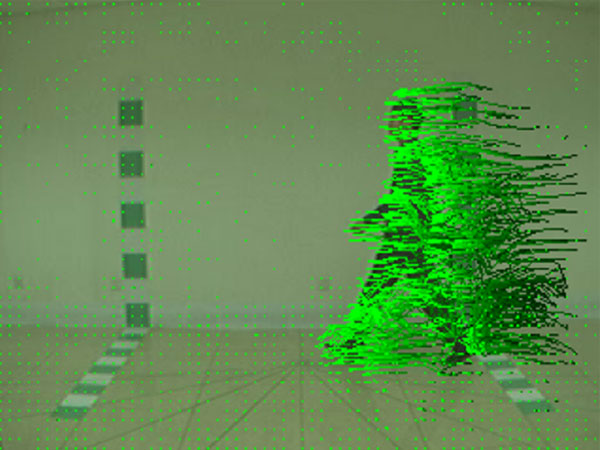
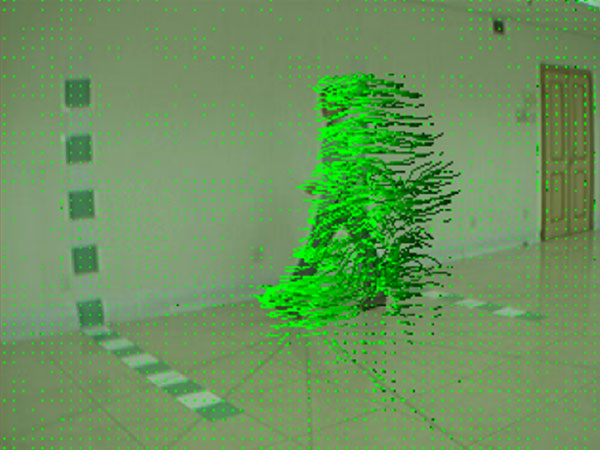
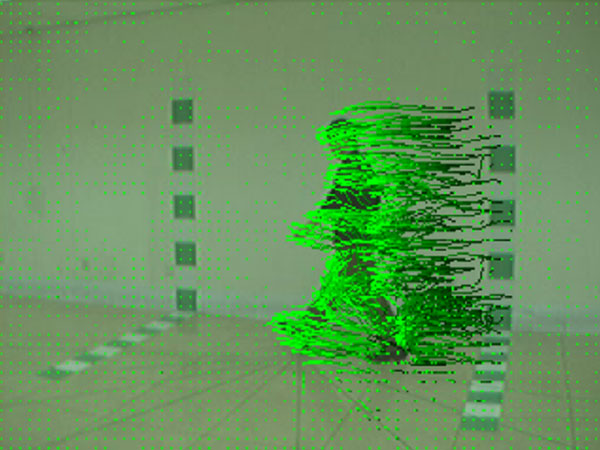
การทดสอบกับข้อมูลในห้องทดลองให้ความแม่นยำที่สูงมาก แต่เมื่อนำมาทดสอบกับข้อมูลในสภาวะจริงที่มีการเปลี่ยนแปลงของเงื่อนไขและสภาพแวดล้อมของการเดิน เช่น ความเร็วของการเดิน ทิศทางของการเดิน และเสื้อผ้าที่สวมใส่ ทำให้ความแม่นยำในการจดจำลดลง งานวิจัยนี้จึงได้พัฒนาต่อยอดในการระบุอัตลักษณ์โดยใช้รูปแบบการเดินภายใต้การไม่จำกัดเงื่อนไขและสภาพแวดล้อมของการเดิน โดยการดึงข้อมูลภาพและวิดีโอที่มีความคงที่ในรูปแบบของ spatial-temporal description ดังที่แสดงในรูปภาพ ซึ่งจะเป็นการใช้เทคนิคการคำนวนขั้นสูงในการประมวลผลภาพ วิธีการที่พัฒนาขึ้นมาใหม่นี้สามารถนำไปประยุกต์ใช้ได้จริงในระบบการรักษาความปลอดภัยด้วยกล้องวงจรปิด เพื่อเพิ่มความปลอดภัยในพื้นที่ที่ต้องการ เนื่องจากวิธีการที่พัฒนามาใหม่เหล่านี้ ถูกคำนึงถึงการเปลี่ยนแปลงของเงื่อนไขต่างๆที่สามารถเกิดขึ้นได้ในสถานการณ์จริง สามารถใช้เป็นส่วนหนึ่งในการสร้าง smart city หรือเมืองอัจฉริยะ ในการเพิ่มความฉลาดแบบอัตโนมัติให้กับระบบกล้องวงจรปิด ในการใช้ข้อมูลไบโอแมทริกซ์ในการระบุอัตลักษณ์บุคคล โดยสามารถเพิ่มความแม่นยำโดยการใช้รูปแบบการเดินและภาพใบหน้าประกอบกัน
การเผยแพร่ผลงาน:
• L. Yao, W. Kusakunniran, Q. Wu, J. Zhang, Z. Tang, W. Yang, Robust Gait Recognition using Hybrid Descriptors based on Skeleton Gait Energy Image, Pattern Recognition Letters (PRL): Special Issue on Learning Compact Representations for Scalable Visual Recognition and Retrieval, DOI: 10.1016/j.patrec.2019.05.012
• W. Kusakunniran, Recognizing gaits on spatio-temporal feature domain, IEEE Transactions on Information Forensics and Security (TIFS), 9(9): 1416-1423, September 2014, DOI: 10.1109/TIFS.2014.2336379
• W. Kusakunniran, Attribute-based learning for gait recognition using spatio-temporal interest points, Image and Vision Computing (IVC), 32(12), 1117-1126, December 2014, DOI: 10.1016/j.imavis.2014.10.004
รางวัลที่ได้รับ:
• รางวัลสภาวิจัยแห่งชาติ: รางวัลผลงานวิจัย ประจำปีงบประมาณ 2562 (รางวัลระดับดี) โดย สำนักงานคณะกรรมการวิจัยแห่งชาติ (วช.)
การติดต่อ:
ผศ. ดร.วรพันธ์ คู่สกุลนิรันดร์
คณะเทคโนโลยีสารสนเทศและการสื่อสาร มหาวิทยาลัยมหิดล
Human Gait as a Biometric for Human Re – Identification under Unconstrained Walking Conditions and Environments
Faculty of Information and Communication Technology, Mahidol University
Project Title:
Gait Recognition as Human Biometric
Research Title:
Human Gait as a Biometric for Human Re-Identification under Unconstrained Walking Conditions and Environments
Researcher (s):
Asst.Prof. Dr.Worapan Kusakunniran
Mr.Lingxiang Yao
Assoc.Prof. Dr.Qiang Wu
Assoc.Prof. Dr.Jian Zhang
Prof. Dr.Zhenmin Tang
Assoc.Prof. Dr.Wankou Yang
Biometrics have been used for human verification and identification for decades. Popular human biometrics are face, fingerprint, and iris. They are effectively used in real applications under a controlled environment. Many external factors are controlled, such as lighting condition, distance to a camera, not wearing hat and sunglasses, viewing angles, and requesting physical contact. However, with these constraints, existing approaches could not be used for a purpose of automatic surveillance monitoring, where human are captured through a surveillance camera from a far distance, under any seen angles, and without any physical contact. This becomes main challenges of this research project. Thus, this project develops a new system using an alternative biometric solution using human gait.
Currently, it could achieve a perfect accuracy of 100%, but under a controlled environment and a fixed walking condition. This is not feasible to be used in a real-world scenario. This project, therefore, focuses on solving challenges of gait recognition under changes of internal and external factors such as camera viewing angles, walking directions, and walking speeds. This will make the gait-based human identification more practical to be used in real-world scenarios.
Publishing:
• L. Yao, W. Kusakunniran, Q. Wu, J. Zhang, Z. Tang, W. Yang, Robust Gait Recognition using Hybrid Descriptors based on Skeleton Gait Energy Image, Pattern Recognition Letters (PRL): Special Issue on Learning Compact Representations for Scalable Visual Recognition and Retrieval, DOI: 10.1016/j.patrec.2019.05.012
• W. Kusakunniran, Recognizing gaits on spatio-temporal feature domain, IEEE Transactions on Information Forensics and Security (TIFS), 9(9): 1416-1423, September 2014, DOI: 10.1109/TIFS.2014.2336379
• W. Kusakunniran, Attribute-based learning for gait recognition using spatio-temporal interest points, Image and Vision Computing (IVC), 32(12), 1117-1126, December 2014, DOI: 10.1016/j.imavis.2014.10.004
Award Grant related to the Project:
• Outstanding Research Award 2019, by National Research Council of Thailand (NRCT)
Key Contact Person:
Asst.Prof. Dr.Worapan Kusakunniran
Faculty of Information and Communication Technology, Mahidol University