
MUIR Capacity Building Projects 2022 – 2025

Capacity Building Projects 2022 – 2025
*****************************************************
Funder: The Rockefeller Foundation, Norwegian Ministry of Foreign Affairs, Thailand International Cooperation Agency (TICA)
Main Organizer: Global Partnerships Division, Mahidol University, Thailand
Project Operator: Global Partnerships Division, Mahidol University, Thailand
Abstract
In response to the rapidly changing global landscape and the growing demand for resilient and adaptive higher education systems, Mahidol University initiated the MUIR Capacity Building Projects 2022–2025 with the aim of strengthening institutional capacity and fostering sustainable international collaboration. Supported by The Rockefeller Foundation, the Norwegian Ministry of Foreign Affairs, and the Thailand International Cooperation Agency (TICA), the projects are designed to enhance research management, academic leadership, and global partnership capabilities among Mahidol University staff and affiliates.
By integrating innovative learning approaches, cross-cultural exchange, and applied capacity-building strategies, this initiative contributes to developing the next generation of globally competent administrators and researchers who can effectively drive institutional growth and international cooperation in alignment with the Sustainable Development Goals (SDGs).
Expected Benefits
-
Strengthened institutional capacity and leadership among university administrators and researchers, enhancing their ability to manage and sustain international projects effectively.
-
Improved understanding of global trends, international cooperation frameworks, and sustainable development policies.
-
Development of key competencies such as strategic planning, project management, communication, and cross-cultural collaboration.
-
Increased opportunities for professional networking and partnership building with regional and international agencies.
-
Promotion of Mahidol University as a hub for global academic collaboration and sustainable development initiatives.
-
Sustainable transfer of knowledge and skills through internal training, mentoring, and knowledge-sharing platforms within Mahidol University.
Objectives
-
To enhance the professional capacity and leadership skills of Mahidol University staff through international and cross-sectoral training programs.
-
To foster a culture of collaboration and partnership between Mahidol University and international organizations, contributing to long-term institutional growth.
-
To strengthen research and project management competencies aligned with international standards and the SDGs.
-
To establish sustainable mechanisms for knowledge transfer and capacity retention across faculties and departments.
-
To promote Mahidol University’s visibility and reputation as a leading institution in global higher education and sustainable partnerships.
Overall Process
-
Needs Assessment and Planning:
Conduct institutional needs analysis to identify capacity gaps in research management, academic leadership, and international collaboration. -
Program Design and Development:
Design targeted capacity-building programs in collaboration with international partners, incorporating training workshops, mentoring sessions, and exchange visits.
-
Implementation and Training:
Conduct capacity-building activities including seminars, leadership training, joint research management sessions, and exchange programs facilitated by experts from partner institutions and funding agencies.
-
Monitoring and Evaluation:
Establish measurable indicators to evaluate skill improvement, leadership development, and partnership outcomes throughout the project duration. -
Knowledge Sharing and Sustainability:
Develop internal dissemination mechanisms such as knowledge-sharing sessions, toolkits, and online platforms to ensure long-term application and sustainability of acquired skills. -
Reporting and Future Collaboration:
Compile progress reports and impact assessments to be shared with funders and partners, identifying opportunities for future capacity-building and collaborative initiatives.
The Rockefeller Foundation
Norwegian Ministry of Foreign Affairs
Thailand International Cooperation Agency (TICA)

MUIR SDGs + Mobility MaPs Projects 2022 – 2025
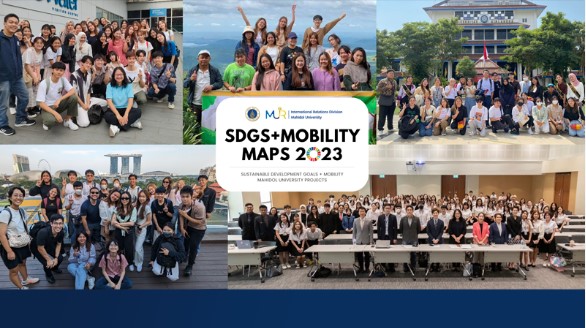
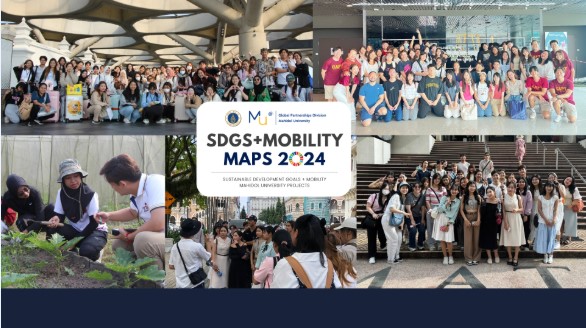
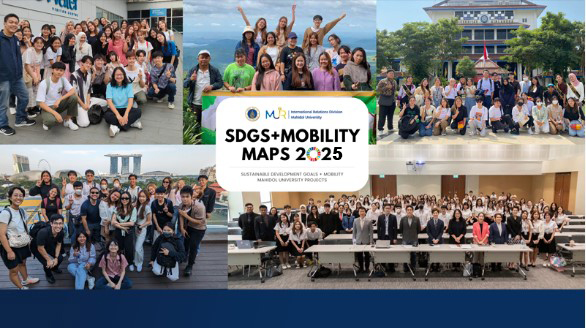
SDGs + Mobility MaPs 2023 – 2025
(Sustainable Development Goals + Mobility Mahidol University Projects)
*****************************************************
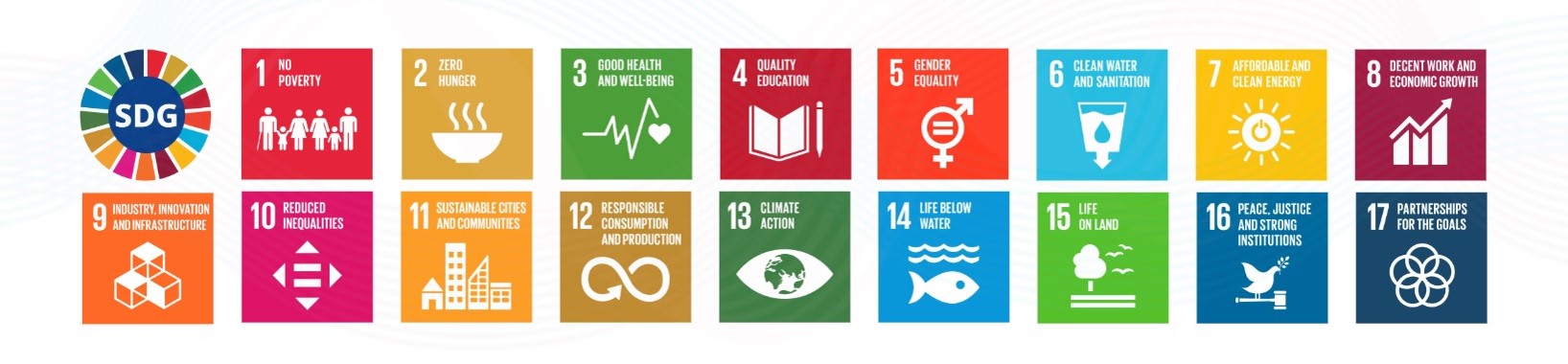
SDGs Related: SDG 17 Partnerships for the Goals | SDG 17.4.1 Education for SDGs commitment to meaningful education
Funder: Mahidol University, Thailand
Main Organizer: Global Partnerships Division, Mahidol University, Thailand
Project Operator: Global Partnerships Division, Mahidol University, Thailand
Abstract
In a world constantly experiencing drastic changes in the climate and economy, the Sustainable Development Goals (SDGs) hold increasing significance as they aim to protect the environment and improve living conditions for all. These goals are internationally recognized as the blueprint for global development, and Thailand is proud to be a part of this global mission. As an educational institution, Mahidol University (MU) has a vital role to play in raising awareness of the SDGs amongst our students and involving them in the nationwide and global attainment of the goals. To this end, MU has conceptualized the Sustainable Development Goals + Mobility Mahidol University Projects: SDGs + Mobility MaPs.
Expected Benefits
-
To improve the entrepreneurial skills to life skills; capability of thinking, planning, and teamwork in a systematic and effective-oriented way
-
Increase awareness among students about the importance of Sustainable Development Goals (SDGs) and their potential impact on global development.
-
Develop a comprehensive understanding of the knowledge, policies, and guidelines related to SDGs in ASEAN countries, providing a valuable essence for future endeavors.
-
Enhance students’ life skills, including critical thinking, effective planning, and teamwork, empowering their ability to contribute systematically and meaningfully to sustainable development efforts.
-
Deepen students’ knowledge of foreign policies, cultures, and societies within the countries of the same region, promoting a broader global perspective.
-
Foster and sustain partnerships between educational institutions and international organizations, strengthening the collective commitment towards achieving SDGs. By embracing these objectives and realizing the expected benefits, we can create a persuasive and engaging platform that motivates and empowers the younger generation to actively support the Sustainable Development Goals (SDGs) while fostering long-lasting partnerships and promoting sustainable development in the region and beyond.
Objectives
-
To inspire and engage the younger generation in recognizing the significance of Sustainable Development Goals (SDGs) and actively participating in supporting their framework.
-
To educate the younger generation about the guidelines and operational aspects of sustainable development within ASEAN countries.
-
To nurture entrepreneurship mindset and cultivate entrepreneurial skills to start project based on SDGs, as well as, systematic thinking, planning, and collaboration skills
-
To provide the younger generation with opportunities to gain international experiences, broaden their knowledge, and develop a deeper understanding of the cultures and social conditions in neighboring countries.
-
To strengthen the sustainable partnership between Mahidol University and academic partners.
Overall Process
-
Formation of Groups and Project Proposals: Formation of Groups and Project Proposals: Four students from the same faculty collaborate to create a project proposal. The project should address 1-3 Sustainable Development Goals (SDGs) and have the potential to make an impact at the faculty, university, or community level.
-
Selection and Incubation: The International Relations Division and Project Advisors, who are designated lecturers with expertise in managing SDGs projects or research, will choose 25 proposals for incubation.
-
Student Mobility Program: The International Relations Division and Project Advisors will arrange student mobility trips for the 25 selected groups to various ASEAN countries on the following dates:
-
SDGs+Mobility MaPs Forum: The International Relations Division and MaPs students will jointly organize the SDGs+Mobility MaPs Forum. This forum will feature project presentations through poster sessions, panel discussions, and sharing sessions. Students will also have the opportunity to share the experiences they’ve gained from participating in the SDGs+Mobility MaPs Forum.